


Markham’s Brotherhood:
The Rosicrucian Manifestos in Modern English
By Steven E. Markham
Published by Ferret Books in 2019
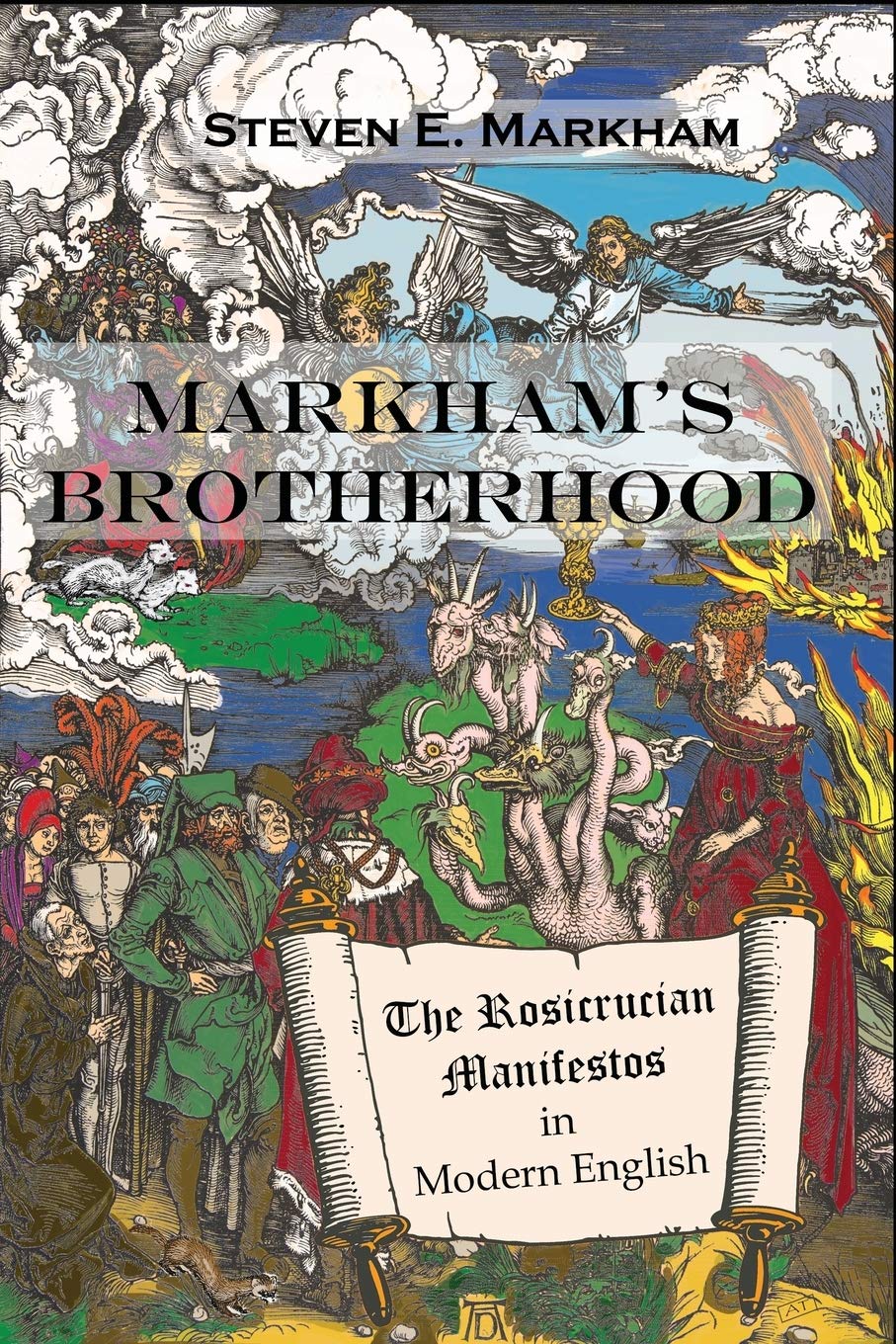
For students of Rosicrucianism, Western esotericism, and the great currents of thought that helped shape modern Freemasonry, Markham’s Brotherhood is a welcome and valuable companion. Steven E Markham has taken on the formidable task of translating the three foundational Rosicrucian texts, the Fama Fraternitatis of 1614, the Confessio Fraternitatis of 1615, and the Chymical Wedding of Christian Rosenkreutz of 1616, into clear and readable modern English while preserving the spirit, strangeness, and symbolic fire of the originals.
One of the book’s greatest strengths is its accessibility. The original manifestos, whether encountered in early English translations or in scholarly editions, can feel like wading through a philosophical marsh in the dark. Markham clears the path without flattening the landscape. His prose flows with an easy rhythm, allowing readers to focus on the ideas rather than wrestle with archaic language. The mystery remains, but the fog lifts.
The accompanying notes and annotations are equally valuable. Markham does not drown the reader in interpretation. Instead, he offers just enough historical and symbolic context to illuminate difficult passages while encouraging readers to form their own conclusions. This balance between guidance and restraint is essential when dealing with texts that have inspired centuries of debate, speculation, and esoteric commentary. He understands that the Rosicrucian tradition is not a puzzle to be solved but a journey to be undertaken.
The book also succeeds in showing why the Rosicrucian manifestos remain historically significant. Their influence reached far beyond the world of occult philosophy, inspiring thinkers such as Robert Fludd and Elias Ashmole and contributing to intellectual movements that would eventually intersect with Freemasonry, Hermeticism, and the broader Western esoteric tradition. Markham restores that sense of living context, reminding us that these texts once stirred Europe like a sudden wind.
Visually, the inclusion of illustrations enriches the experience. The artwork complements the text without overwhelming it, reinforcing the symbolic atmosphere that surrounds the Rosicrucian tradition. It feels less like reading a book and more like stepping into a chamber where old ideas still breathe.
If the book has a limitation, it is only that readers seeking a heavily academic or critical edition may find the commentary lighter than expected. But that is not Markham’s purpose. His aim is not to build a fortress of scholarship but to open a doorway. In that respect he succeeds with grace.
Overall, Markham’s Brotherhood is an excellent introduction to the Rosicrucian manifestos and a worthy addition to the library of anyone interested in esoteric history, mysticism, alchemy, Rosicrucianism, or the philosophical roots of Freemasonry. It achieves the rare feat of making a notoriously difficult body of literature approachable while preserving its depth, symbolism, and sense of wonder.
A thoughtful, readable, and respectful modern rendering of some of the most influential texts in Western esotericism.